2025 Fantasy book of the Year, independent Press
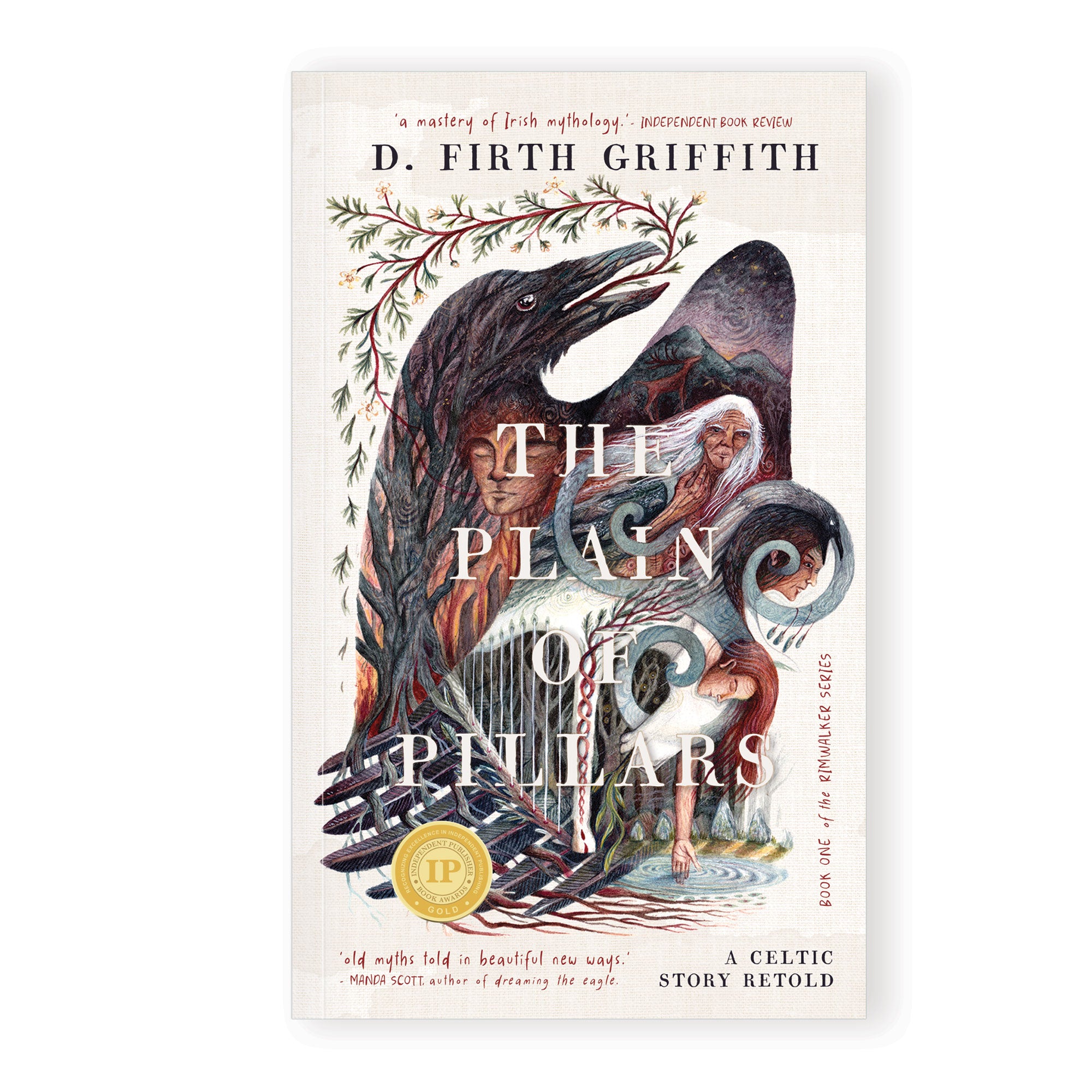
An award-winning trilogy of mythological, literary horror, and fantasy companion novels that explores Irish Mythology’s deepest wail-strains, from the battle-saga of the Cath Maige Turied to the Irish Creation Story of An Bradán Feasa, weaving Irish Myth with horror and Celtic stories with Shakespeare’s Hamlet and Ovid’s Metamorphoses.
All books in the Rimwalker Series can be read as a Series or as stand-alone novels.




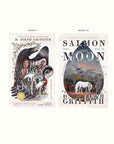
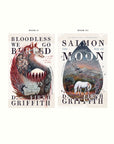
Rimwalker Series Bundle
🥇 A 2025 Independent Publishers GOLD Award, Best in Fantasy.
🥇 A 2025 PenCraft 1st Place in Fiction.
🥇 A 2025 National Indie Excellence Finalist in Fiction.
The Rimwalker Series, or sin bandâ-kerdetis natus, is an award-winning trilogy of mythological, literary horror, and fantasy companion novels that explores Irish Mythology’s deepest wail-strains, from the battle-saga of the Cath Maige Turied to the Irish Creation Story of An Bradán Feasa, weaving Irish Myth with horror and Celtic stories with Shakespeare’s Hamlet and Ovid’s Metamorphoses.
Praised for its lyrical and dark prose, the Rimwalker presents an new eco-mythology to currach of our times, holding themes of colonialism, animism, grief and its apathy, and sacred geography. It holds our ancient Insular Celtic stories in a two-way dreamwalking: running back with the long—ago peoples in order to write a new way forward.
All digital purchases (ebook and audiobook) are direct-downloads, meaning that you will receive the files to add to your viewing and listening devices. We do this so that you "own" the book instead of "owning access" to the book, like Amazon, Kindle, and other options online. After ordering, you will receive a download link!
Book III, The Way of Salmon Moon is PRE-ORDER, published November 30, 2026.


Irish fantasy retelling of the Cath Maige Turied.

Irish Mythology blood—splattered by Shakespeare’s Hamlet and post apocalyptic literary horror.

Irish Mythology meets Ovid’s Metamorphoses in all its chilling brutality and beauty in this Paleolithic horror novel and fantasy retelling of the Irish An Bradán Feasa.
Literary Awards


Editorial Reviews
"The Plain of Pillars retells Celtic myths and revitalizes ancient folkloric traditions, weav[ing] a powerful critique ... of colonization, apathy, and individualism. Griffith demonstrates a mastery of genre fiction and mythology, employing narrative techniques that are both lyrically impressive and philosophically engaging.”
– INDEPENDENT BOOK REVIEW
“A captivating retelling of Celtic mythology that will resonate with modern readers…with compelling characters, intriguing dialogue, and evocative descriptions, Griffith keeps this folkloric tale alive and vibrant…the novel itself feels like a form of resistance against colonization and cultural extinction.”
– KIRKUS REVIEWS
"The prose itself is a triumph, a stunning reinterpretation of Celtic mythology. The lyrical tone lends a dreamlike quality to the narrative, beautifully blending the mythical and the emotional. Griffith bridges antiquity and the present, weaving a vibrant tapestry of hope, resilience, and magic…[with] thematic undercurrents infusing the story with urgency and depth, creating a tale as reflective as it is captivating. The Plain of Pillars will leave you with a sense of wonder and a renewed appreciation for the delicate, eternal balance between creation and destruction."
– LITERARY TITANS
“Griffith’s wonderful work, The Plain of Pillars, transports the reader into ancient Ireland, a misty dream like world through the genesis story of a people who come from the stars. Set in an ancient land after the last ice age, the story introduces the epic battle between the People of the Síraide and the Oceaners, where life must struggle as a tribe to survive on the island known as Ériu-land (Ireland). The god-king Balor brings the world of the Rim to a seeming unavoidable apocalypse, except for the hero’s journey of Long Arm, the son of Pryderi and the reincarnation of the leader Luchta. It is his love of Mother Earth matched with the nurturing and teaching of Bacharigu, the youngest of The Mothers, who can together save the world, if only heeded. Griffith has retold an ancient, Irish story that is strikingly like other ancient narratives that proves to me that we are all indeed related.”
– TAYLOR KEEN, author of Rediscovering Turtle Island: A First People’s Account of the Sacred Geography of America.
"Griffith’s unique use of the crow as a narrator of war and destruction, as well as community and unity, aligns with the diverse belief across many cultures that the crow is a symbol of destiny and power as well as associated with darkness, evil, death and war. Written in stunningly beautiful, descriptive prose, The Plains of Pillars uses ancient myth to illuminate modern day issues."
– JANET ROBERTS, author of What Lies We Keep
"An extraordinary book, The Plain of Pillars enchanted me into silence. A great many people should read this book and become just as enchanted. It is potent and activating, a stirring, a remembering of ancient bones and so much more and I feel this is a part of it all, it’s timing is without a doubt divine."
– CHELITA Kahutianui o-te-Rangi ZAINEY, indigenous Māori storyteller and healer, mokopuna of the Waitaha nation.
“As the old system crumbles, the new will be built out of the stories we tell ourselves and each other about ourselves, each other and our place on this animate earth as conscious nodes in the web of life. If we’re going to build new systems, we need old myths told in new ways and Griffith’s outstanding book, The Plain of Pillars, offers us a grand, beautiful, enchanting story, winding back and forth through plains of ideas and being: new-being and old-being, being as a part of becoming, being something greater than we imagine until it’s upon us. This is a beautiful book in all ways, and an essential step in our exploration of who we could be if we really cared about transformation.”
– MANDA SCOTT, author of Any Human Power and host of the Accidental Gods podcast.
“Shivers across the body, palpitations of emotion, struck by thoughts of awe, captivated by words—this book is felt! Weaving from a space before time, The Plain of Pillars is a poetic blueprint for reverence and morality. A great gift for a world in need.”
– DANE SCOTT, indigenous Māori storyteller, Taonga Pūoro musician, and filmmaker.
“Griffith weaves an epic, dreamlike mythopoesis - a powerful, deeply inspired, animist folktale for our imperiled times.”
– MAREN MORGAN, Death in The Garden.
Industry Reviews
"A sharp critique of colonization, apathy, and individualism." Reviewed by Samantha Hui
"A captivating revitalization of Celtic mythology that will resonate with modern readers." Reviewed by Kirkus Reviews
"A story that is both epic in scope and deeply intimate." Reviewed by Literary Titans
"A lyrically sharp and abstractly horrifying exploration of identity and grief." Independent Book Review
"A bold and emotional, raw and intimate novel, like I had stumbled into a hidden doorway." Literary Titan
Kincentric Mythological Fantasy