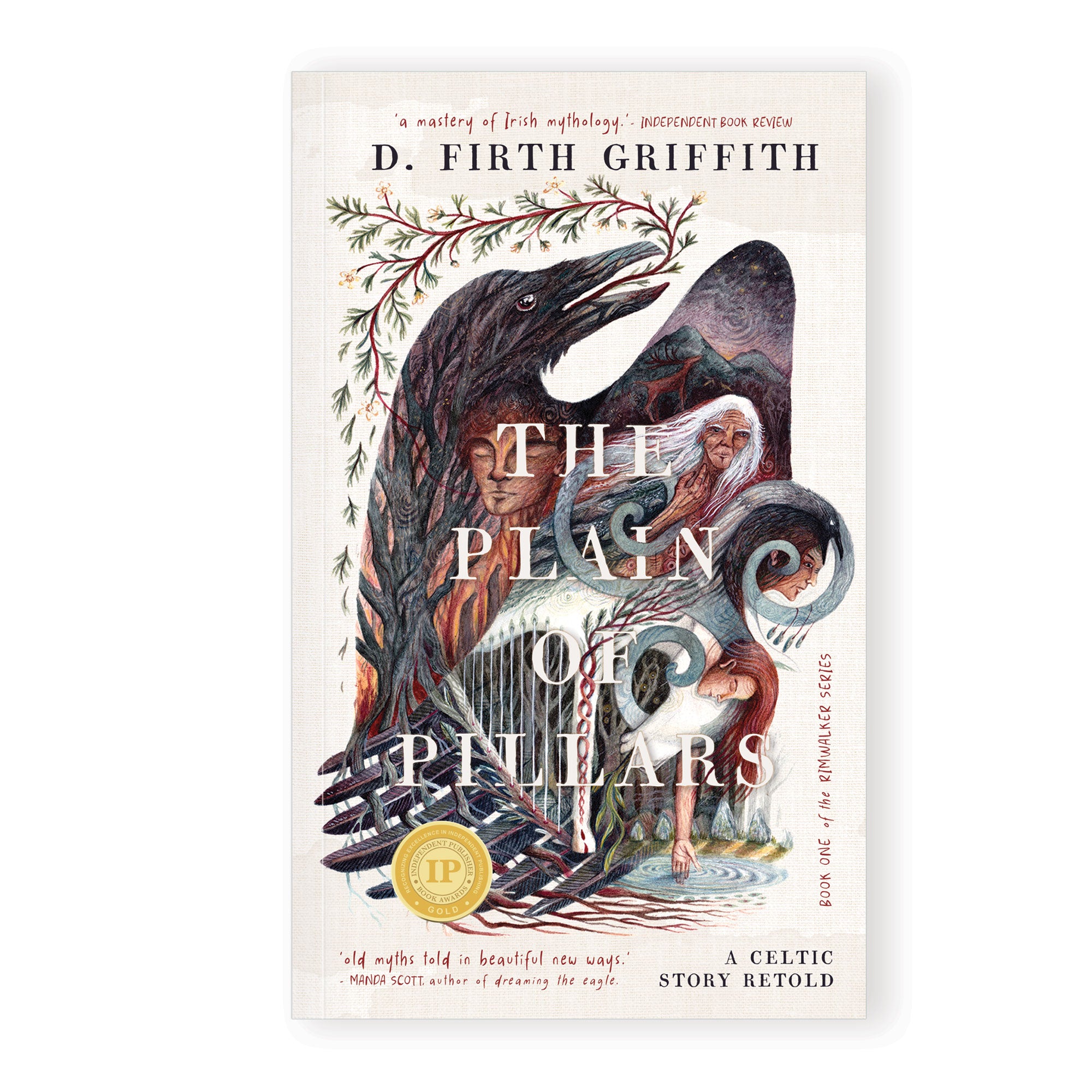
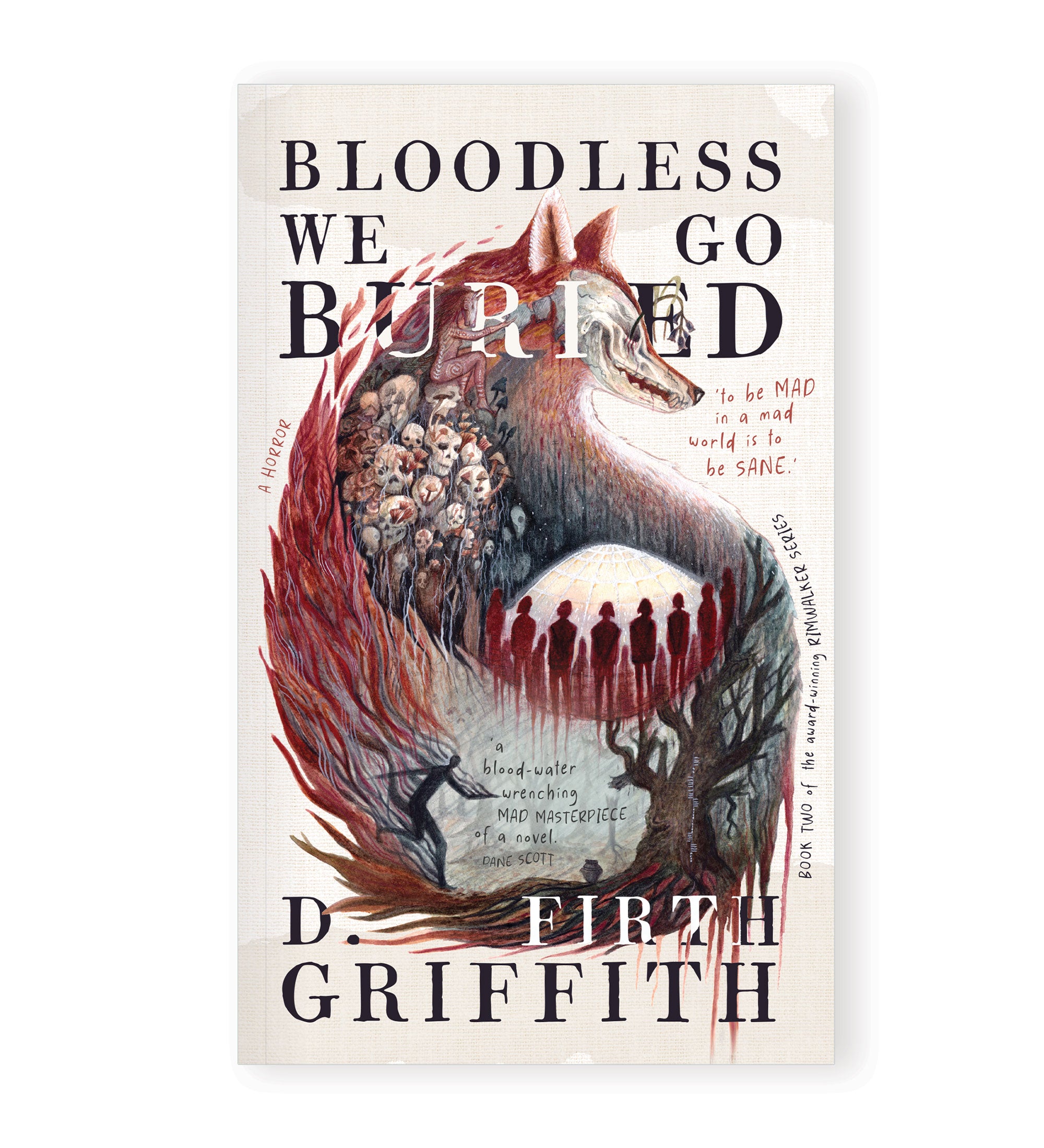
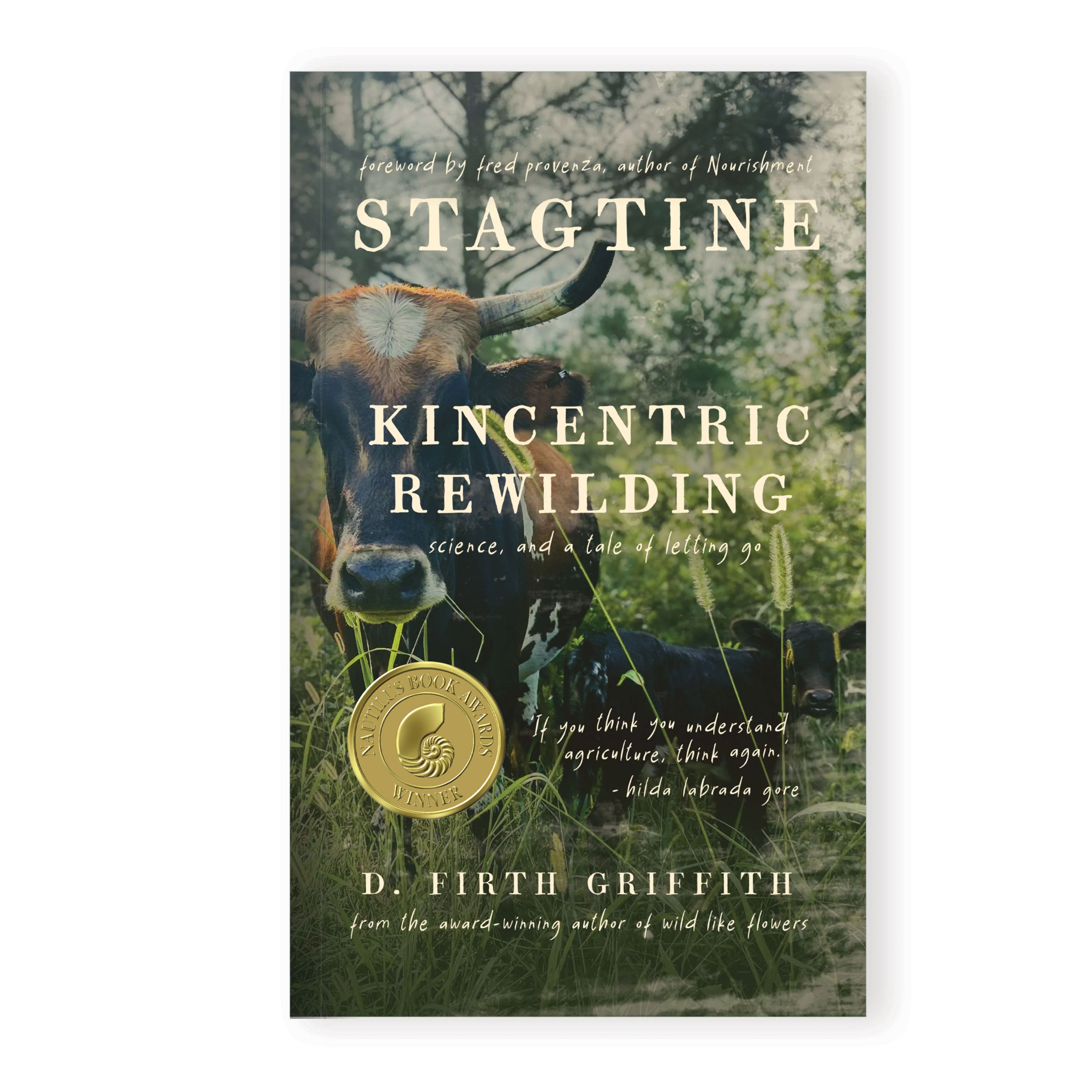
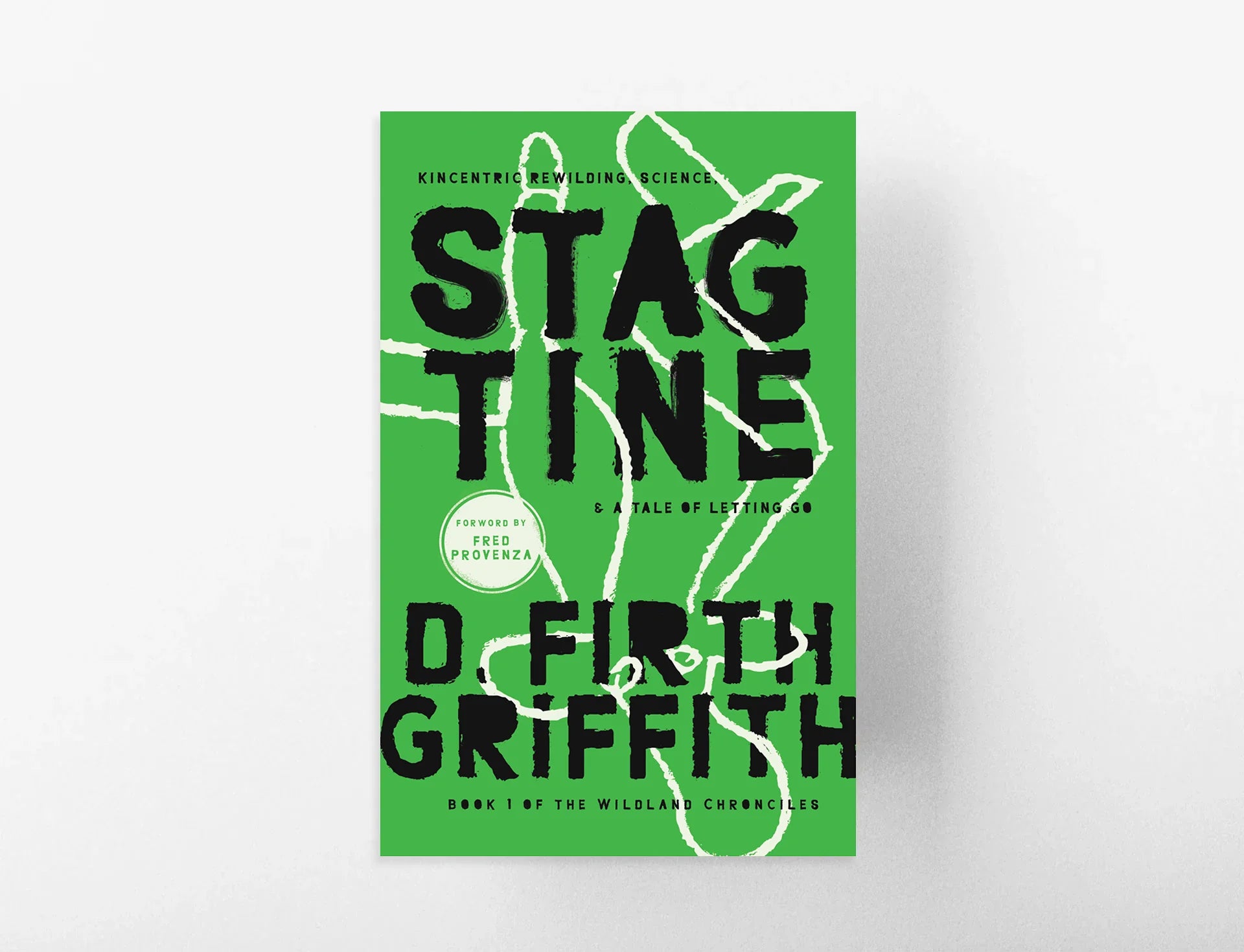
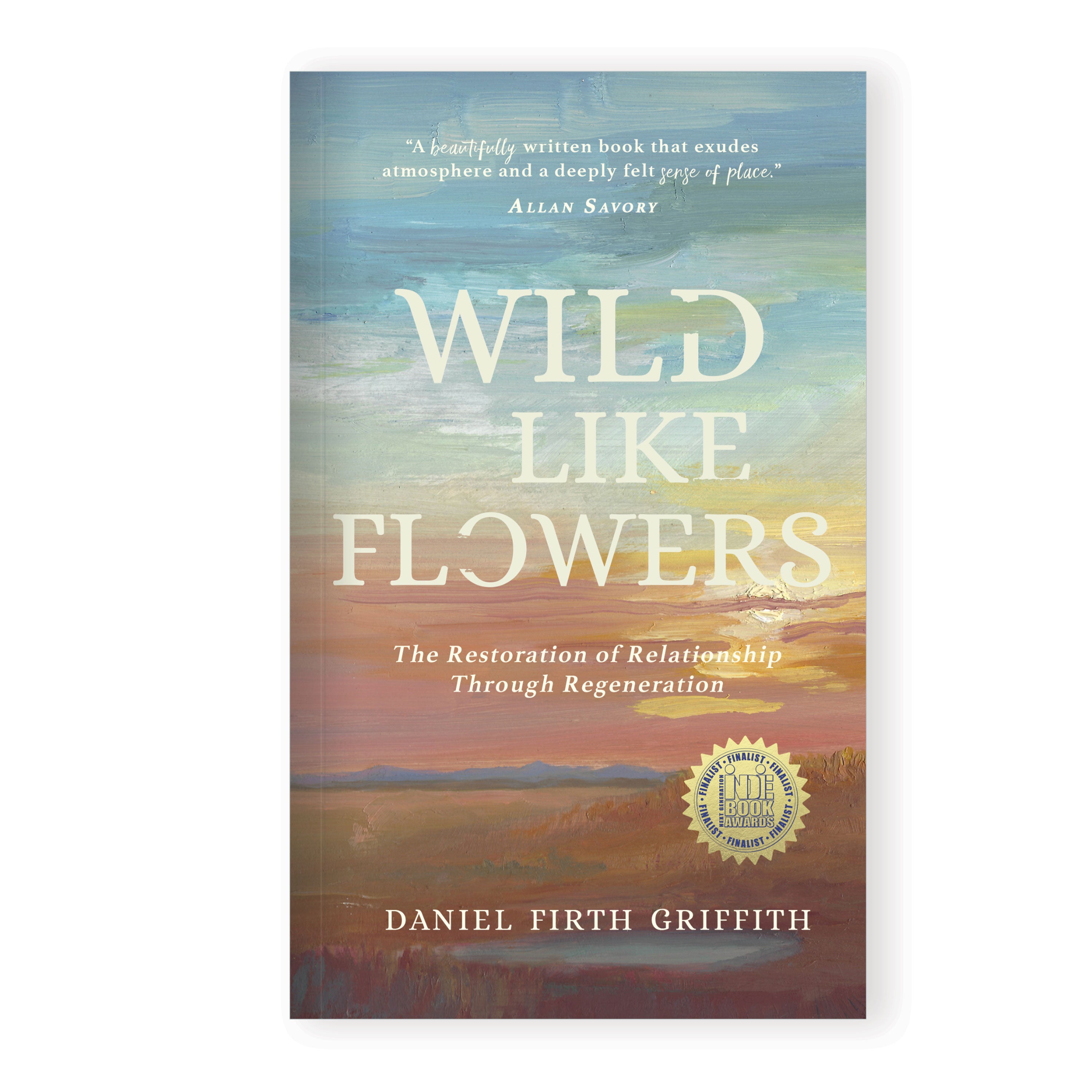
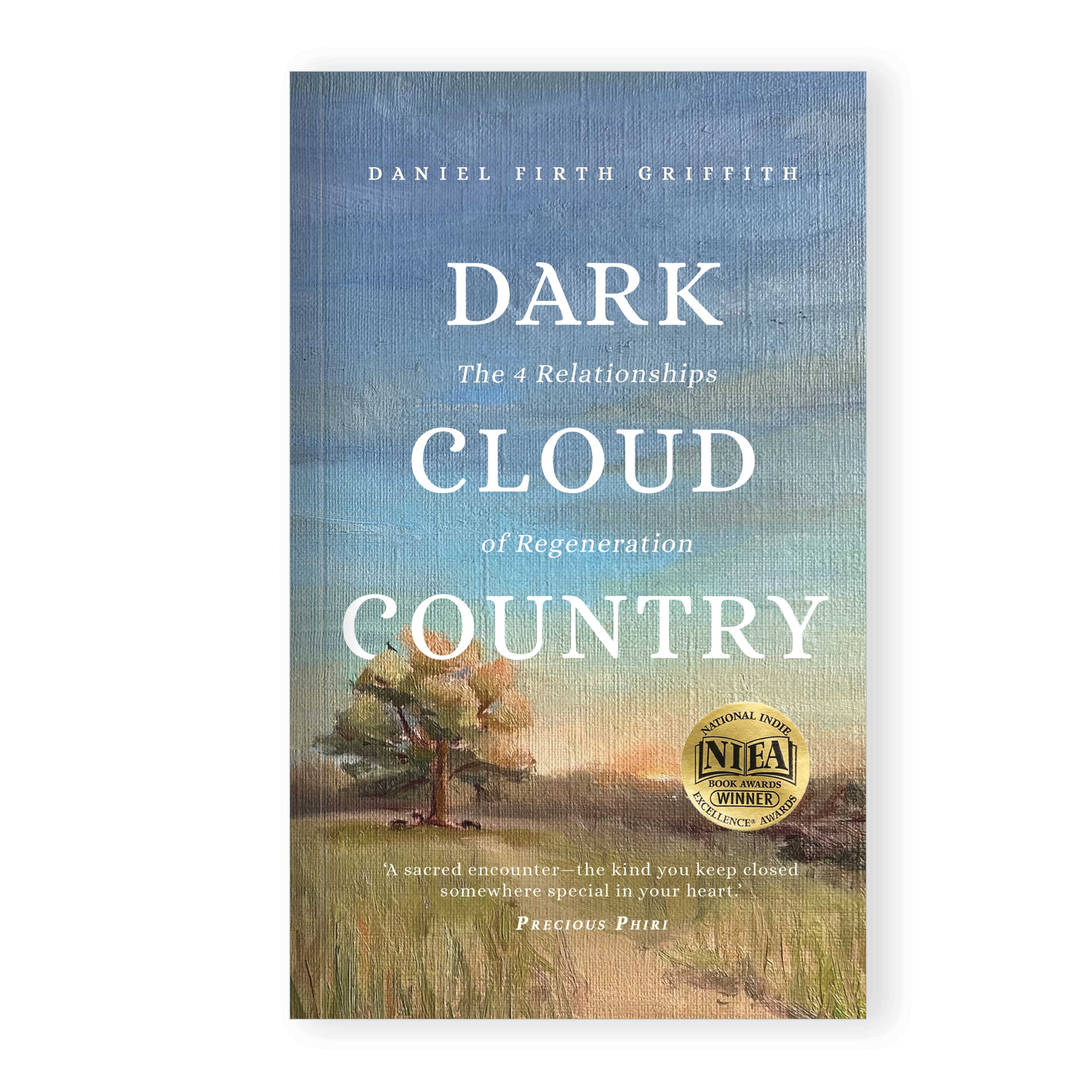
From the Award-winning Rimwalker series

"A feral retelling of Irish Mythology," (Independent Book Review) that "belongs on the shelf beside Cormac McCarthy and Robin Wall Kimmerer," (IndieReader) The Way of Salmon Moon is a darkly beautiful elegy and retelling of the Irish An Bradán Feasa that bends literary horror into a Paleolithic saga between a man and a horse that will delight fans of Stephen Graham Jones, Cormac McCarthy, and Clive Barker.

All books in the Rimwalker Series can be read as a Series or as stand-alone novels.

3: The Way of Salmon Moon: A Paleolithic Horror

$6.99 USD Sale Save

A darkly beautiful elegy and retelling of the Irish An Bradán Feasa that bends literary horror into a Paleolithic saga between a man and a horse from the award-winning author of the “mastery of mythology” (Independent Book Review) and the Fantasy Book of the Year (Independent Press) The Plain of Pillars.

PRE-ORDER, published November 30, 2026.

The Way of Salmon Moon is a Paleolithic literary horror novel of a man named Cairbre, who finds himself at the end of his people with a horse that is more than she seems and a heart rife with stories that are trying to kill him. Hunted by invaders who sup on warm wet flesh, together they cross the Rim of the World and enter a menacing and often dreamlike journey into a land where rivers fight like gods and spirits dance like wolves and violence strikes as suddenly as silence, a land where ceremony is paid for in blood, dreams too.

The Way of Salmon Moon is Irish Mythology’s An Bradán Feasa interwoven with Ovid’s Metamorphoses in all its chilling brutality and beauty presenting a provoking and lyrical journey through the stars of the Irish sacred wheel of the year. It is a story about the price of love and the fluidity of being, told with bold and primordial prose. A blend of the weird, the crass, the germinal, and the tender, Griffith’s tale offers, with uncanny and chilling clarity, the portrait of  the Irish cosmic nexus and creation’s unsettled faculties, asking what does it mean to migrate, to take too much, for a shape to be made new in form?

"A hauntingly beautiful story [that] belongs on the shelf beside Cormac McCarthy and Robin Wall Kimmerer. Written with a poetic intensity that resonates [and] weaves trauma, healing, and heritage into beauty…it is a mythology of connection—to elders, to the spiritual world, to nature, and to the self. It's a story of healing and medicine, of a human being learning from animals and adapting to a new world. It’s an absolute gem." — IndieReader

"A lyrical and transportive epic drawing deeply on Irish mythology, The Way of Salmon Moon weav[es] a melodic tapestry of language…mysticism…and chaotic beauty. This is not a novel to be passively observed, but a sprawling, visceral history…a uniquely transformative work of mythic fantasy, which unpacks the concept of creation in all its forms.” — Independent Review of Books

“The Way of Salmon Moon is not a beach read. The worldbuilding isn’t a prop. It’s a full cosmology, one where weather, hunger, language, ceremony, blood, and animal bodies all belong to the same biosphere. It’s immersive and alive with ceremony…a strange, violent devotional, a feral retelling of Irish myth. The high, chanting, mythic register [of the] prose feels less like narration and more like someone ranting beside a fire while the world is ending. It reads like ritual. The [paleolithic] land…is a corporeal character in Griffith’s hands. Snow presses against the body. Rivers have will. The Moon and Sun aren’t just objects in the sky but presences with names, moods, and individual obligations. The dead don’t vanish, and animals aren’t some-kind of symbols waiting for humans to interpret them. They’re kin. They’re witnesses, teachers, threats, and sometimes all of those at once. Griffith requires the reader to enter that worldview instead of simply watching it from the outside.” — Independent Book Review

"Fierce, unusual, deeply rooted. A brutal Paleolithic novel about grief, kinship, language, and the duty of carrying memory forward…that moves like a story told beside a fire, half remembered by the body and half carried by the stars. Griffith’s prose is dense and ceremonial, full of images that feel dug out of soil, snow, hide, bone, and river mud…a mythology about how stories, when carried with enough devotion, can become a way home." — Literary Titan.

All digital purchases (ebook and audiobook) are direct-downloads, meaning that you will receive the files to add to your viewing and listening devices. We do this so that you "own" the book instead of "owning access" to the book, like Amazon, Kindle, and other options online.After ordering, you will receive a download link!

Format Ebook

Item is in stock Only 0 left in stock Item is out of stock Item is unavailable

Series Bundle


a paleolithic horror novel

“An absolute gem, a hauntingly beautiful story [that] belongs on the shelf beside Cormac McCarthy and Robin Wall Kimmerer.”

— IndieReader

a paleolithic horror novel

“For readers who like Stephen Graham Jones’s mythic violence, Cormac McCarthy’s brutal lyricism, or Clive Barker’s flesh-and-spirit horror. The prose feels less like narration and more like someone ranting beside a fire while the world is ending. It reads like ritual.”

— Independent Book Review

a paleolithic horror novel

"The Way of Salmon Moon is a brutal Paleolithic novel...that moves like a story told beside a fire, half remembered by the body and half carried by the stars."

— Literary Titan

a paleolithic horror novel

"A uniquely transformative work of mythic horror."

— Independent Review of Books

Industry Reviews

“A hauntingly beautiful story [that] belongs on the shelf beside Cormac McCarthy and Robin Wall Kimmerer. An absolute gem.” IndieReader

“A melodic tapestry, lyrical, sprawling, visceral, a uniquely transformative work of mythic horror." Independent Review of Books

"Fierce, unusual, deeply rooted. A brutal Paleolithic novel…that moves like a story told beside a fire, half remembered by the body and half carried by the stars." Literary Titan

“Immersive and alive with ceremony…a full cosmology, a strange, violent devotional, a feral retelling of Irish myth [with] high, chanting, mythic prose that feels less like narration and more like someone ranting beside a fire while the world is ending.” — Independent Book Review

Customer Reviews

Overall rating: 4.3 / 5 from 12 reviews.

Enter the dreaming time in this book, where pages transmit the natural law of Mother Earth to the reader. This book will add 50 pounds to your shelf when you've finished. It's dense and nutritive. The perfect Paleolithic journey of man and horse over breakfast. Many satisfying breakfasts.

3: The Way of Salmon Moon: A Paleolithic Horror

I needed a couple of chapters to enter my flow state of reading, but then I was swiftly transported into a different realm of existence, where this otherworldly story saturated with myth, mysticism, and deep ancestral heartache unfolds. I appreciate the abundance of insightful notes, which together read almost like an etymological history encyclopedia. For the sake of flow, I skipped the notes until reaching the end of a chapter and then read them all at once before starting the next chapter. It is very obvious that the author poured his heart and soul into the writing. If you find the genre intriguing and you love allegoric poetry and poetic language, there’s a good chance that this novel will quite profoundly resonate with you.

3: The Way of Salmon Moon: A Paleolithic Horror

I love folklore inspired books and this is exactly that, it is packed with with grit, kinship and duty. I did find that the first 20% of the book was hard to get into, maybe it was the period when I was reading it, but another chapters in the book it gets so so much better - the pacing keeps leaving you want to read more!

3: The Way of Salmon Moon: A Paleolithic Horror

The Way of Salmon Moon is a strange, mythic novel that often feels closer to an oral legend than conventional horror. The prose is dense, lyrical and rooted in folklore and ritual. I loved the sense that nature, memory and myth were all occupying the same space, and Cairbre’s relationship with Rykati gave the story its strongest emotional thread. At the same time, I found the book difficult to fully enter. The language is extremely deliberate, the mythology is heavy, and the frequent notes sometimes made the reading experience feel more studied than immersive. I admired a lot of what Griffith was doing without always enjoying the act of reading it. There is real prettiness in it, especially in its treatment of grief, survival and the stories people carry forward. It is an ambitious and very distinctive book, but ultimately one I respected more than I connected with.

3: The Way of Salmon Moon: A Paleolithic Horror

In The Way of Salmon Moon, author Daniel Firth Griffith weaves an incredible world with no borders between human, nature and its spirits. A journey into folklore and old tales that's deep and complex. I'll say that the language was not easy for me and there are a lot of notes, so it might not be to everyone's taste. Recommend for lovers of dark, history and folklore that don't mind getting deep into a journey of spirit and mind.

3: The Way of Salmon Moon: A Paleolithic Horror

The Way of Salmon Moon is the kind of book that completely immerses you in its world. D. Firth Griffith’s prose is beautifully lyrical and almost dreamlike, with imagery that makes the landscape feel like a living part of the story. I especially loved the way mythology, nature, and memory are woven together, creating something that feels both ancient and completely original. It’s captivating, visceral, and incredibly atmospheric, with writing that feels almost like listening to an old story being told around a fire.

3: The Way of Salmon Moon: A Paleolithic Horror

I DNF’ed this book at 39% because it simply was not for me. I struggled with the writing style based a) on the number of footnotes on each page and b) the very detailed descriptions incorporating the footnotes. Whilst I appreciate this was important to the author, I simply could not push through with my reading experience. Further the plot leaned very much towards the spiritual and less horror which I personally did not expect. As many people online seemed to love the writing and the plot I rated it three stars, despite personally not having enjoyed it.

3: The Way of Salmon Moon: A Paleolithic Horror

This paleolithic story unfurls like you're sleeping outside by the fire in big sky country. Griffith knows how to paint a picture with words so that you, the reader, get sucked right into the story. A beautiful story about exile, grief and remembering. It feels like reading poetry. I’ve not read this author’s works before and I will immediately be going to read his other novels! Thank you for this book!

3: The Way of Salmon Moon: A Paleolithic Horror

“For progress is beauty disallowed to die. And it is progress that holds the world still.” The Way of the Salmon Moon is a unique, hauntingly beautiful novel following a man named Cairbre in the Paleolithic era. He is the last in his tribe of people, and with his horse, he goes on a journey around his world, filled with nature and monsters. But while the plot is something you will never forget, the true standout of this novel is the writing. This is one of those books that you wish would never end. The beautiful prose is something you hang on to, cherishing every word, committing each sentence to memory. The writing was so gorgeous and lyrical, something I never would have expected from a horror novel. The profound themes of grief and friendship found in unexpected places are simultaneously heartbreaking and beautiful. As a horse lover, I truly appreciated Rykati, Cairbre’s horse, as a prominent character in the story and as the one who shows him what it means to live. It is clear that the author put so much time and love into this novel, and it shows in every word written. I absolutely adored this book, and would recommend it to anyone who loves horses and poetic writing

3: The Way of Salmon Moon: A Paleolithic Horror

Review of ARC A saga about a man, a horse, and a Paleolithic world? Um, yes! This book is thrilling, terrifying, amazing. Highly recommend! After reading the first two books in the Rimwalker Series, I was eager to receive Book 3. Each book is truly a standalone/companion novel with their own flares of slightly differing genres and plots and characters, and I have to say that the author did a fantastic job at weaving them together, while also keeping them apart. They could easily be read in any order and land just as potent. One could say that The Way of Salmon Moon starts off a bit slow, and I could see how some may start considering to DNF it, but I urge you to KEEP GOING! The first half of the book provides context and attunes all of your senses. And the second part doesn’t let you go! Have you ever had one those days that feels never ending and each hour could have been a full day in and of itself? The author masterfully sprinkles these feelings throughout, while also playing with the idea that maybe time isn’t linear and what our modern minds see as true may not have always been so. Highly, highly recommend.

3: The Way of Salmon Moon: A Paleolithic Mythology

his is a book about what remains after a people are broken, and about how stories, when carried with enough devotion, can become a way home. Griffith’s prose is dense and ceremonial, full of repeated phrases, Proto-Celtic language, animal kinship, footnoted meanings, and images that feel dug out of soil, snow, hide, bone, and river mud. The language doesn’t just describe Cairbre’s world. It builds that world’s way of thinking. Horses, salmon, wolves, mushrooms, stars, rivers, and mothers aren’t symbols placed on top of the story. They’re participants in it. Rykati, the old mare, gives the book some of its most grounded warmth, and her bond with Cairbre turns the journey into a conversation between man and more-than-human kin. What makes the book compelling is how it treats transformation. Cairbre doesn’t simply move from wounded survivor to mythic figure. He’s changed through ordeal, through relationship, through memory, and through contact with forces older than his own grief. The final part toward Bradán and the Salmon Moon brings together the book’s obsessions with death, knowledge, homecoming, and the body’s place in the sacred. By the end, Cairbre’s survival has become something larger than endurance. It has become metamorphosis.

3: The Way of Salmon Moon: A Paleolithic Mythology

Series Literary awards

2025 Independent Publishers GOLD Award, Best in Fantasy.
2025 National Indie Excellence Finalist in Fiction.
2025 Pencraft Award of Literary Excellence in Fiction.

Award-Winning Series Reviews

Customer Reviews

Overall rating: 4.3 / 5 from 12 reviews.

Enter the dreaming time in this book, where pages transmit the natural law of Mother Earth to the reader. This book will add 50 pounds to your shelf when you've finished. It's dense and nutritive. The perfect Paleolithic journey of man and horse over breakfast. Many satisfying breakfasts.

3: The Way of Salmon Moon: A Paleolithic Horror

I needed a couple of chapters to enter my flow state of reading, but then I was swiftly transported into a different realm of existence, where this otherworldly story saturated with myth, mysticism, and deep ancestral heartache unfolds. I appreciate the abundance of insightful notes, which together read almost like an etymological history encyclopedia. For the sake of flow, I skipped the notes until reaching the end of a chapter and then read them all at once before starting the next chapter. It is very obvious that the author poured his heart and soul into the writing. If you find the genre intriguing and you love allegoric poetry and poetic language, there’s a good chance that this novel will quite profoundly resonate with you.

3: The Way of Salmon Moon: A Paleolithic Horror

I love folklore inspired books and this is exactly that, it is packed with with grit, kinship and duty. I did find that the first 20% of the book was hard to get into, maybe it was the period when I was reading it, but another chapters in the book it gets so so much better - the pacing keeps leaving you want to read more!

3: The Way of Salmon Moon: A Paleolithic Horror

The Way of Salmon Moon is a strange, mythic novel that often feels closer to an oral legend than conventional horror. The prose is dense, lyrical and rooted in folklore and ritual. I loved the sense that nature, memory and myth were all occupying the same space, and Cairbre’s relationship with Rykati gave the story its strongest emotional thread. At the same time, I found the book difficult to fully enter. The language is extremely deliberate, the mythology is heavy, and the frequent notes sometimes made the reading experience feel more studied than immersive. I admired a lot of what Griffith was doing without always enjoying the act of reading it. There is real prettiness in it, especially in its treatment of grief, survival and the stories people carry forward. It is an ambitious and very distinctive book, but ultimately one I respected more than I connected with.

3: The Way of Salmon Moon: A Paleolithic Horror

In The Way of Salmon Moon, author Daniel Firth Griffith weaves an incredible world with no borders between human, nature and its spirits. A journey into folklore and old tales that's deep and complex. I'll say that the language was not easy for me and there are a lot of notes, so it might not be to everyone's taste. Recommend for lovers of dark, history and folklore that don't mind getting deep into a journey of spirit and mind.

3: The Way of Salmon Moon: A Paleolithic Horror

The Way of Salmon Moon is the kind of book that completely immerses you in its world. D. Firth Griffith’s prose is beautifully lyrical and almost dreamlike, with imagery that makes the landscape feel like a living part of the story. I especially loved the way mythology, nature, and memory are woven together, creating something that feels both ancient and completely original. It’s captivating, visceral, and incredibly atmospheric, with writing that feels almost like listening to an old story being told around a fire.

3: The Way of Salmon Moon: A Paleolithic Horror

I DNF’ed this book at 39% because it simply was not for me. I struggled with the writing style based a) on the number of footnotes on each page and b) the very detailed descriptions incorporating the footnotes. Whilst I appreciate this was important to the author, I simply could not push through with my reading experience. Further the plot leaned very much towards the spiritual and less horror which I personally did not expect. As many people online seemed to love the writing and the plot I rated it three stars, despite personally not having enjoyed it.

3: The Way of Salmon Moon: A Paleolithic Horror

This paleolithic story unfurls like you're sleeping outside by the fire in big sky country. Griffith knows how to paint a picture with words so that you, the reader, get sucked right into the story. A beautiful story about exile, grief and remembering. It feels like reading poetry. I’ve not read this author’s works before and I will immediately be going to read his other novels! Thank you for this book!

3: The Way of Salmon Moon: A Paleolithic Horror

“For progress is beauty disallowed to die. And it is progress that holds the world still.” The Way of the Salmon Moon is a unique, hauntingly beautiful novel following a man named Cairbre in the Paleolithic era. He is the last in his tribe of people, and with his horse, he goes on a journey around his world, filled with nature and monsters. But while the plot is something you will never forget, the true standout of this novel is the writing. This is one of those books that you wish would never end. The beautiful prose is something you hang on to, cherishing every word, committing each sentence to memory. The writing was so gorgeous and lyrical, something I never would have expected from a horror novel. The profound themes of grief and friendship found in unexpected places are simultaneously heartbreaking and beautiful. As a horse lover, I truly appreciated Rykati, Cairbre’s horse, as a prominent character in the story and as the one who shows him what it means to live. It is clear that the author put so much time and love into this novel, and it shows in every word written. I absolutely adored this book, and would recommend it to anyone who loves horses and poetic writing

3: The Way of Salmon Moon: A Paleolithic Horror

Review of ARC A saga about a man, a horse, and a Paleolithic world? Um, yes! This book is thrilling, terrifying, amazing. Highly recommend! After reading the first two books in the Rimwalker Series, I was eager to receive Book 3. Each book is truly a standalone/companion novel with their own flares of slightly differing genres and plots and characters, and I have to say that the author did a fantastic job at weaving them together, while also keeping them apart. They could easily be read in any order and land just as potent. One could say that The Way of Salmon Moon starts off a bit slow, and I could see how some may start considering to DNF it, but I urge you to KEEP GOING! The first half of the book provides context and attunes all of your senses. And the second part doesn’t let you go! Have you ever had one those days that feels never ending and each hour could have been a full day in and of itself? The author masterfully sprinkles these feelings throughout, while also playing with the idea that maybe time isn’t linear and what our modern minds see as true may not have always been so. Highly, highly recommend.

3: The Way of Salmon Moon: A Paleolithic Mythology

his is a book about what remains after a people are broken, and about how stories, when carried with enough devotion, can become a way home. Griffith’s prose is dense and ceremonial, full of repeated phrases, Proto-Celtic language, animal kinship, footnoted meanings, and images that feel dug out of soil, snow, hide, bone, and river mud. The language doesn’t just describe Cairbre’s world. It builds that world’s way of thinking. Horses, salmon, wolves, mushrooms, stars, rivers, and mothers aren’t symbols placed on top of the story. They’re participants in it. Rykati, the old mare, gives the book some of its most grounded warmth, and her bond with Cairbre turns the journey into a conversation between man and more-than-human kin. What makes the book compelling is how it treats transformation. Cairbre doesn’t simply move from wounded survivor to mythic figure. He’s changed through ordeal, through relationship, through memory, and through contact with forces older than his own grief. The final part toward Bradán and the Salmon Moon brings together the book’s obsessions with death, knowledge, homecoming, and the body’s place in the sacred. By the end, Cairbre’s survival has become something larger than endurance. It has become metamorphosis.

3: The Way of Salmon Moon: A Paleolithic Mythology